amazon
Delivery Standing & Achievements
Creating an engaging experience to help independent delivery drivers know how they are performing and incentivizing great service.
The Problem
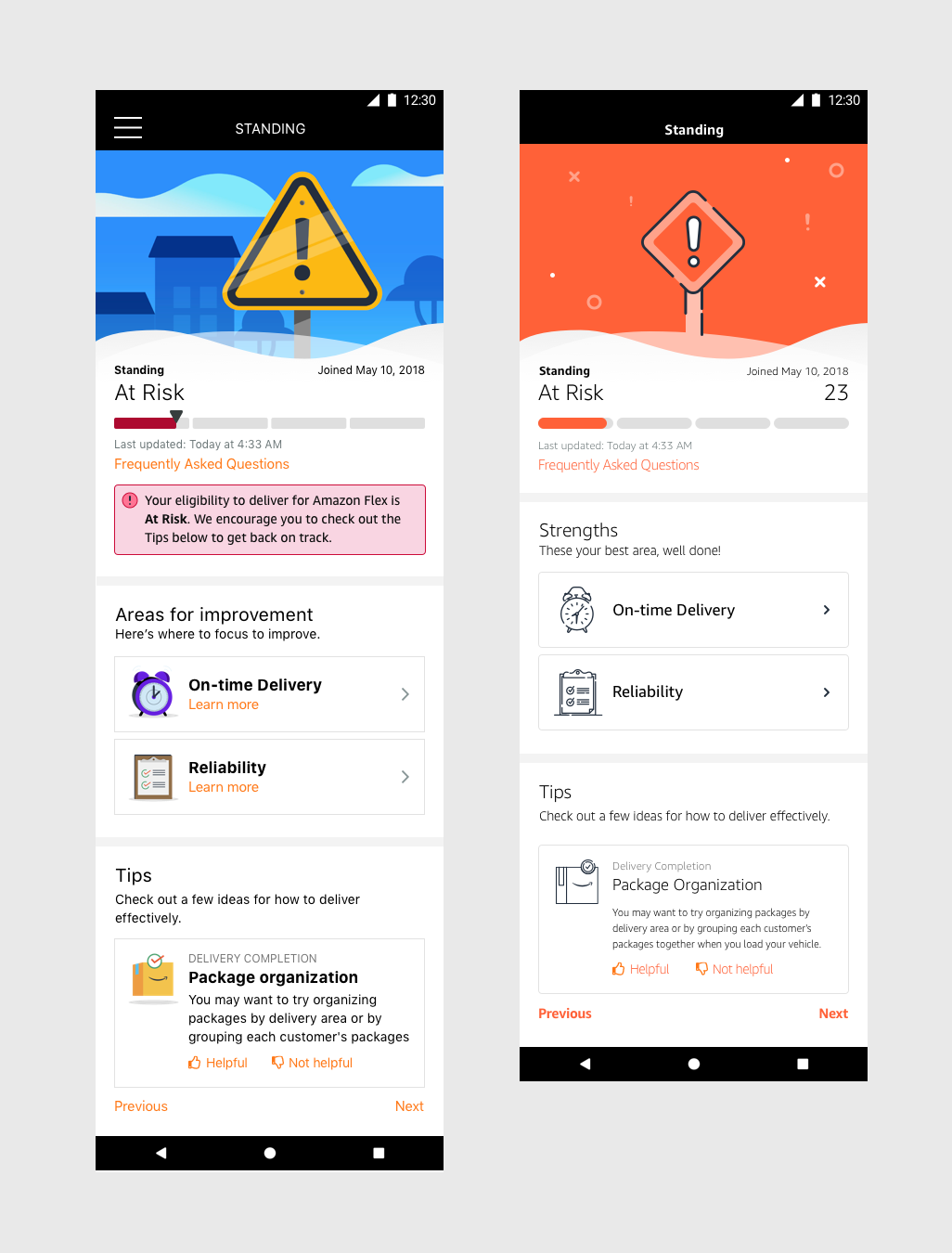
Historically, Amazon Flex didn't provide Delivery Partners with any visibility into how they were performing, nor were there any non-monetary engagement mechanisms in place to encourage desired behaviors. This lack of feedback led to anxiety among drivers about their standing in the program, resulting in higher churn rates and inconsistent service quality. Amazon would also stop working with a flex Delivery Partner based on these metrics, even though they weren't exposed to the driver.
The Solution
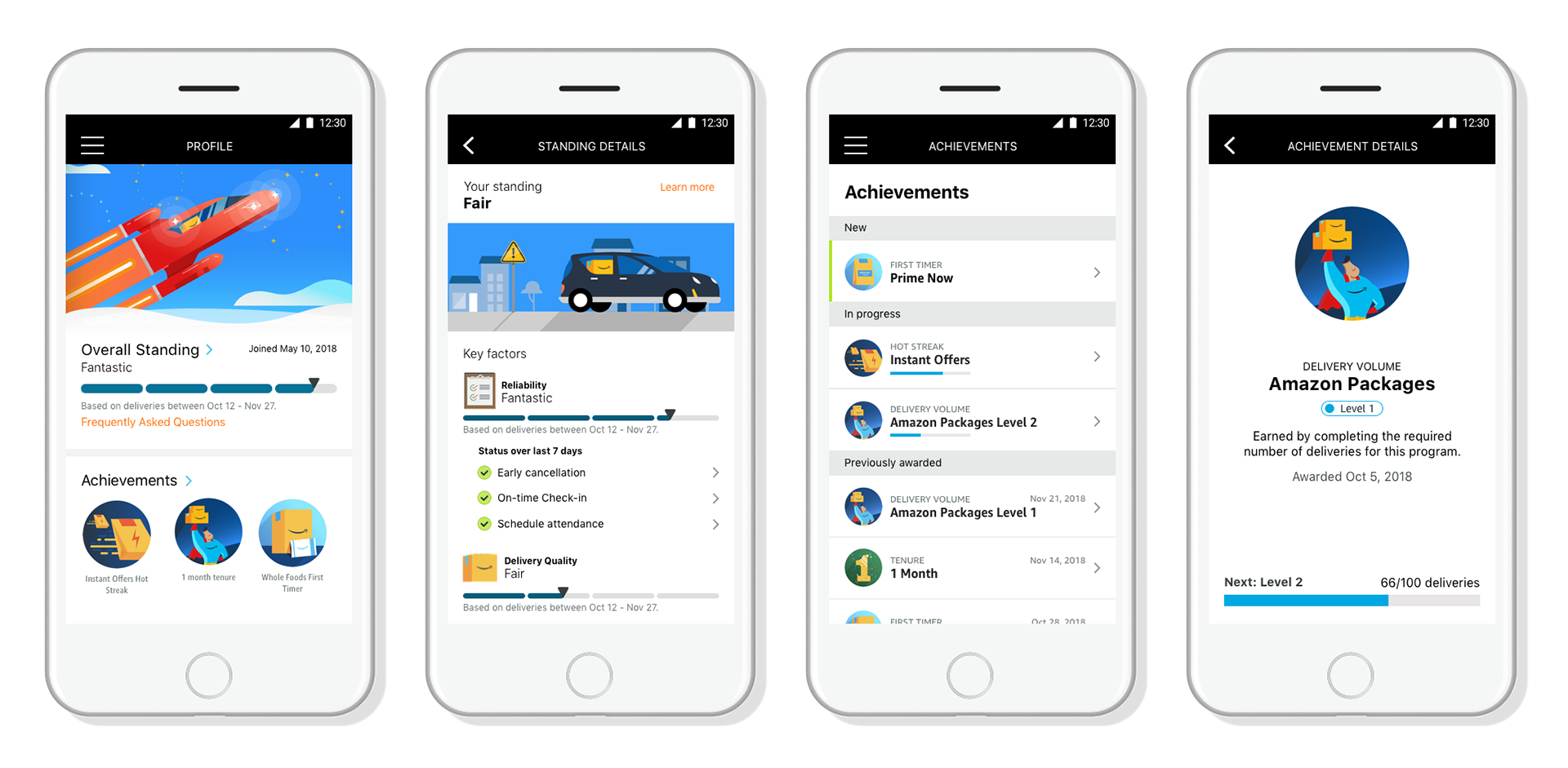
The Standing & Achievements initiative was a two-pronged approach. The standing elements focused on alleviating anxiety about getting kicked out of the program, and achievements provided a foundation for leveraging gamification mechanics that have proven effective in other industries and amongst gig-economy competitors.
My Role
I was brought in on this project at a point when there was significant churn between the leadership and product team, primarily about the visual design work being done by a vendor. I provided creative direction for the vendor, reset expectations with business leadership, and reworked the design to scale for the future with the expectation that new gamification components would be coming online. I also revisited the layout and underlying visual design of the UX to raise the bar.
Profile Page
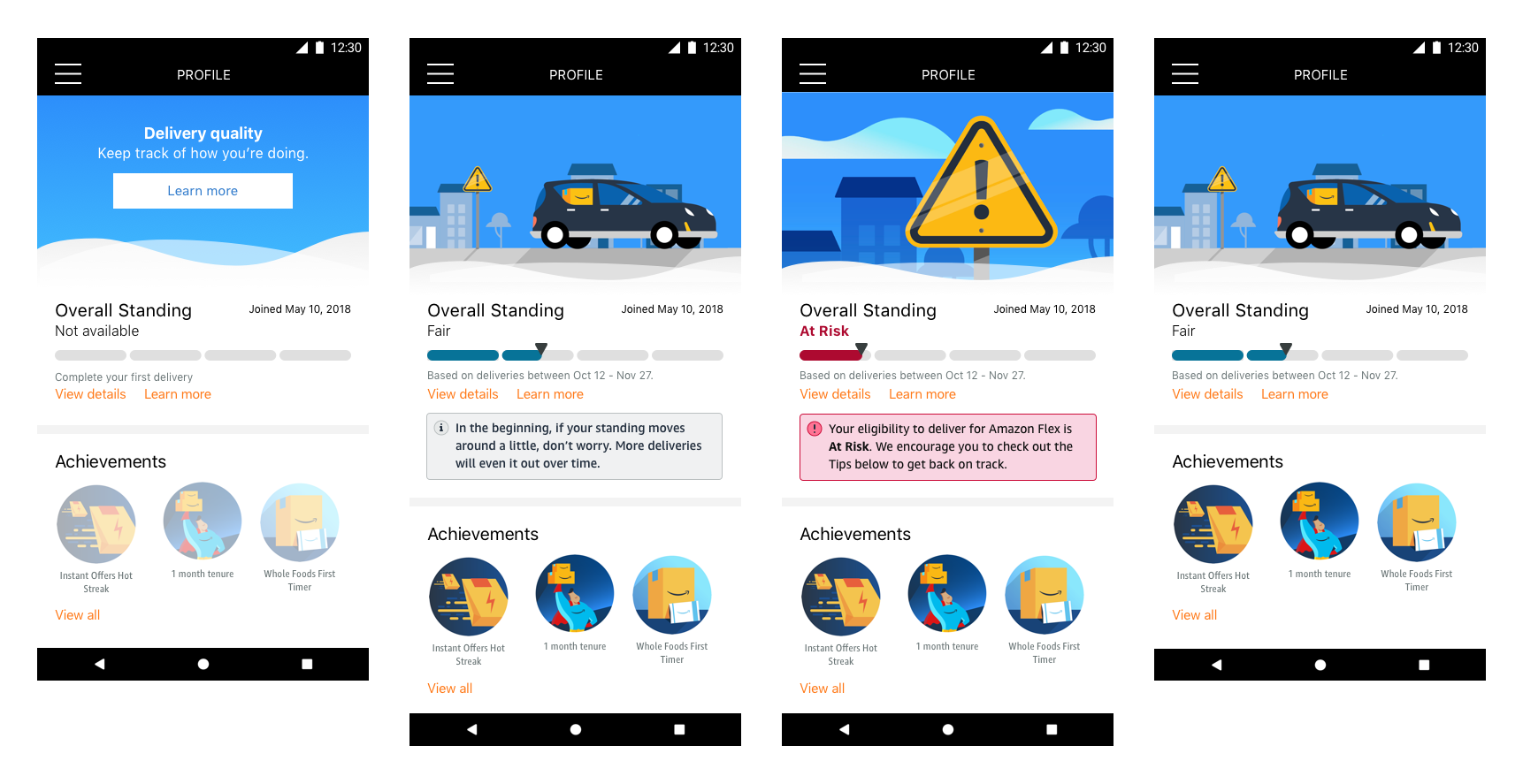
The profile page is intended to grow as the program expands. Initially, it shows standing and achievements, but long term, it could show leaderboards, perks, promotions, and other incentives that would drive engagement and retention for the Flex program.
Notifications & Celebrations
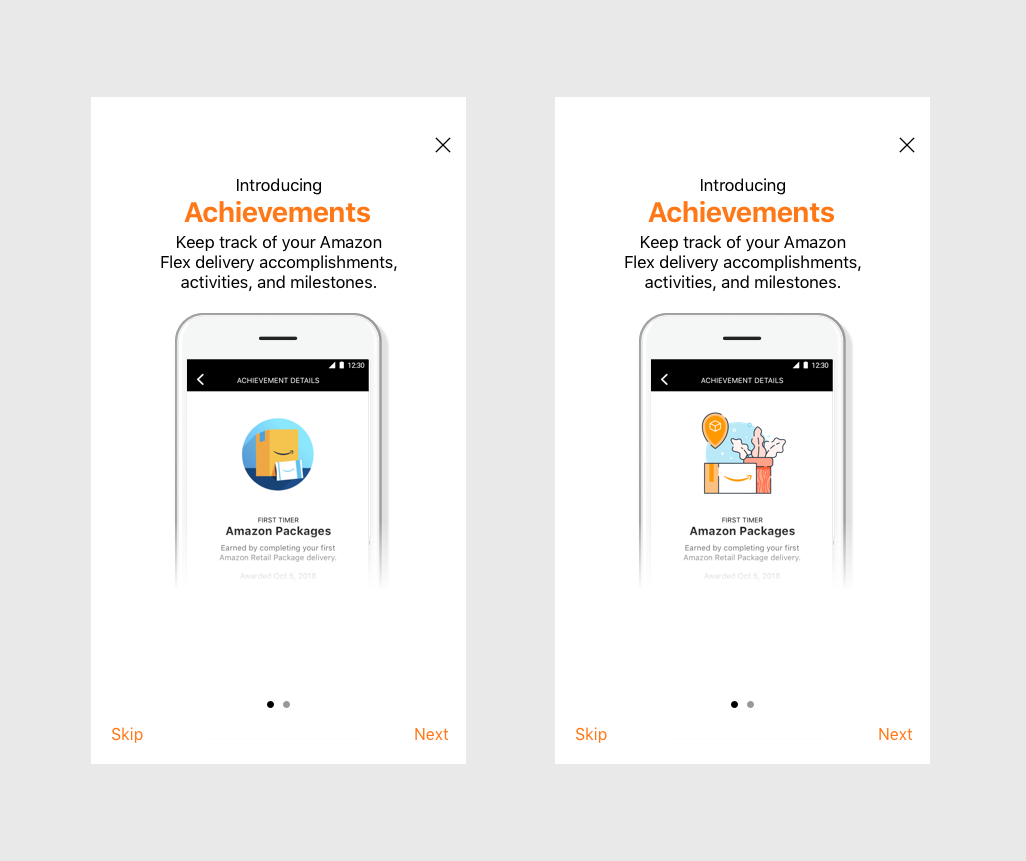
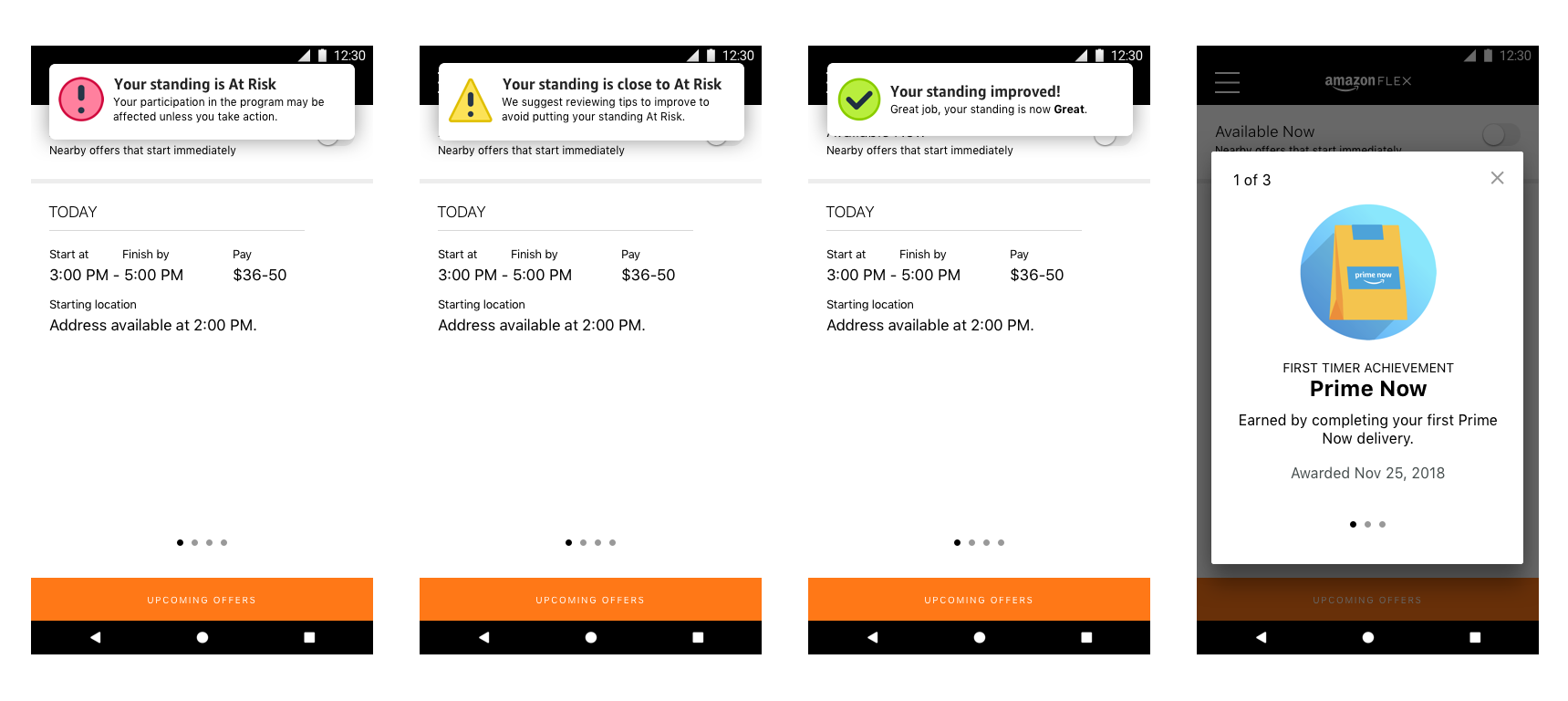
To make sure users were aware of standing changes, we leveraged in-app notifications. In the case of achievements, we used a larger display with an animated background to celebrate the moment they were awarded an achievement with the intent of helping them feel appreciated and recognized for their efforts.
Standing Details
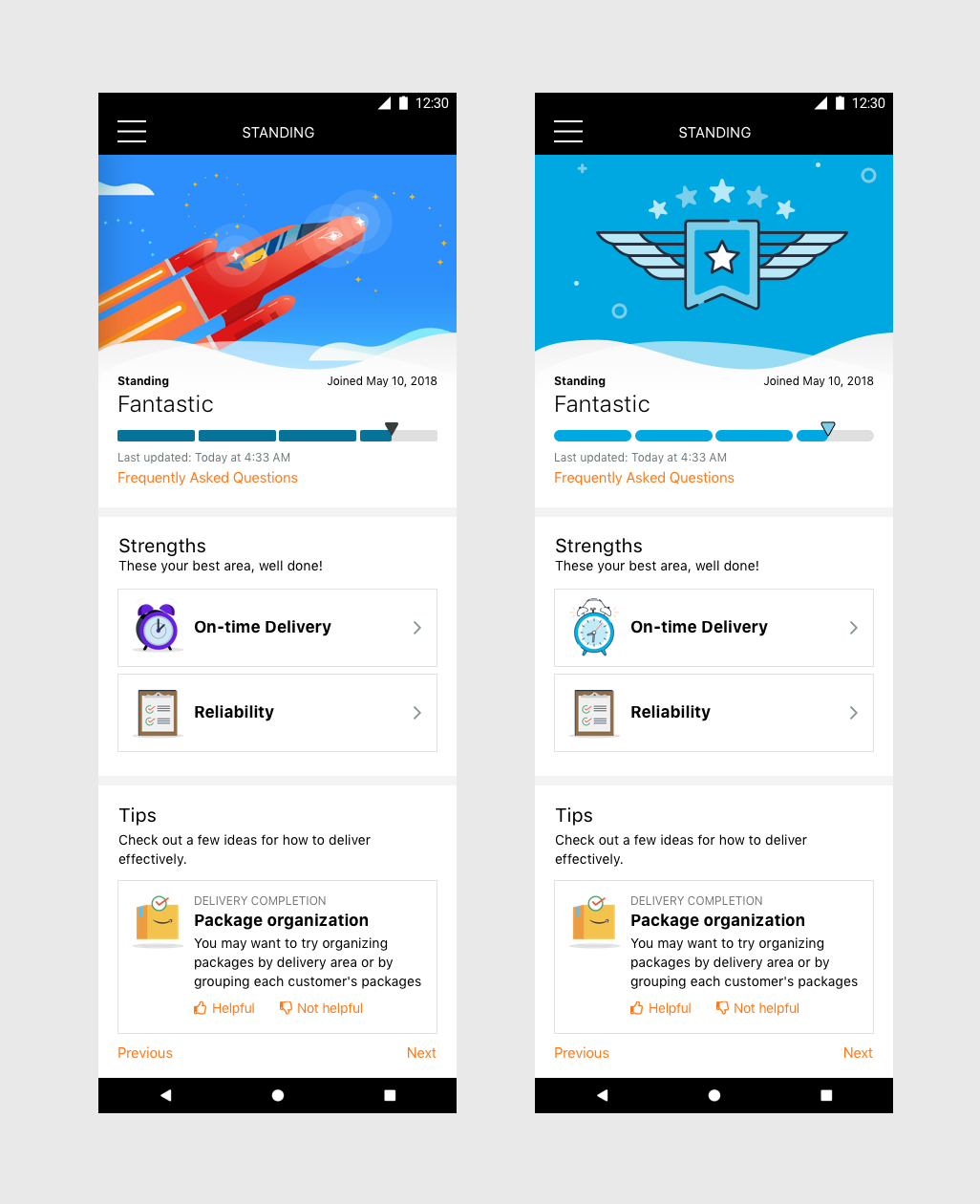
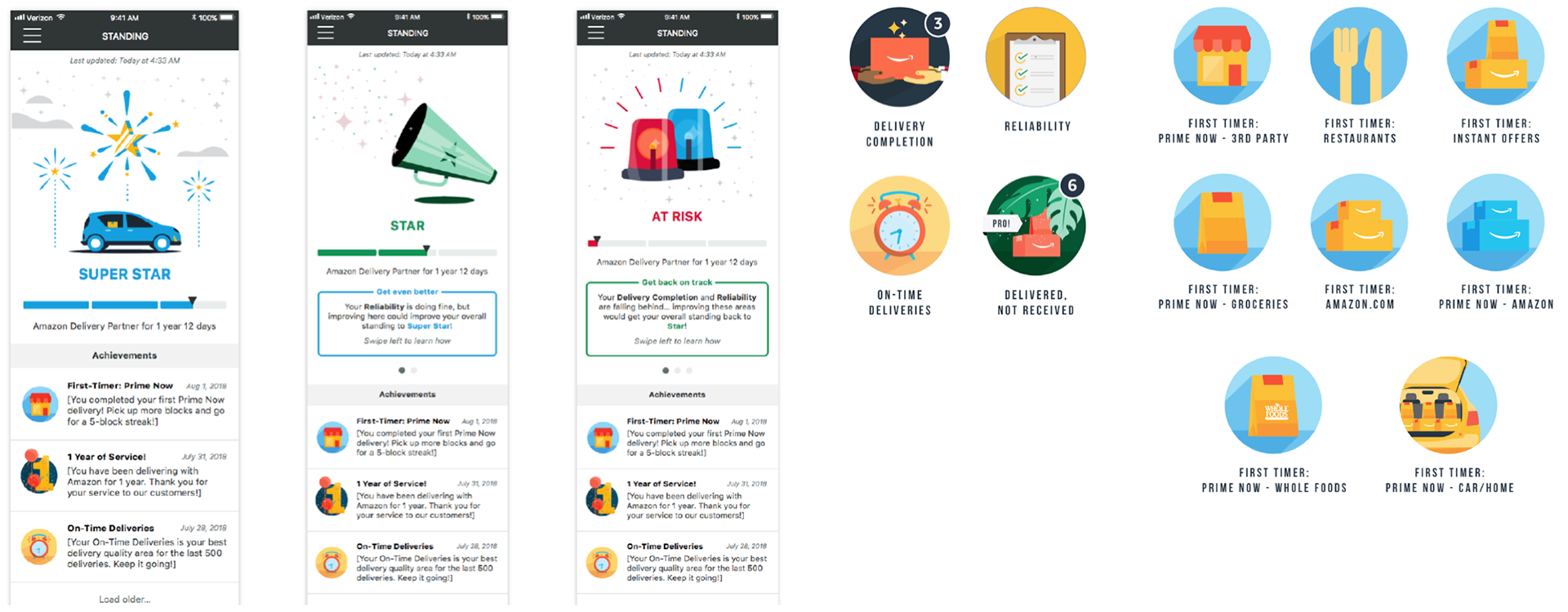
The standing details screen provides delivery drivers with a comprehensive, at-a-glance view of their performance across key metrics that impact their standing in the program. This transparency helps drivers understand exactly where they stand and what areas need attention.
The interface breaks down performance into clear categories:
- Delivery Success Rate: Shows the percentage of successful deliveries, helping drivers maintain high completion rates
- On-Time Delivery: Tracks punctuality, one of the most critical metrics for customer satisfaction
- Attendance & Reliability: Monitors how consistently drivers show up for their scheduled blocks
- Customer Feedback: Aggregates ratings and comments from customers to highlight service quality
Each metric is clearly visualized with progress indicators and trend information, making it easy for drivers to identify which areas are performing well and which ones need improvement. This data-driven approach reduces anxiety about account standing while providing actionable insights to help drivers maintain or improve their performance.

Achievements System
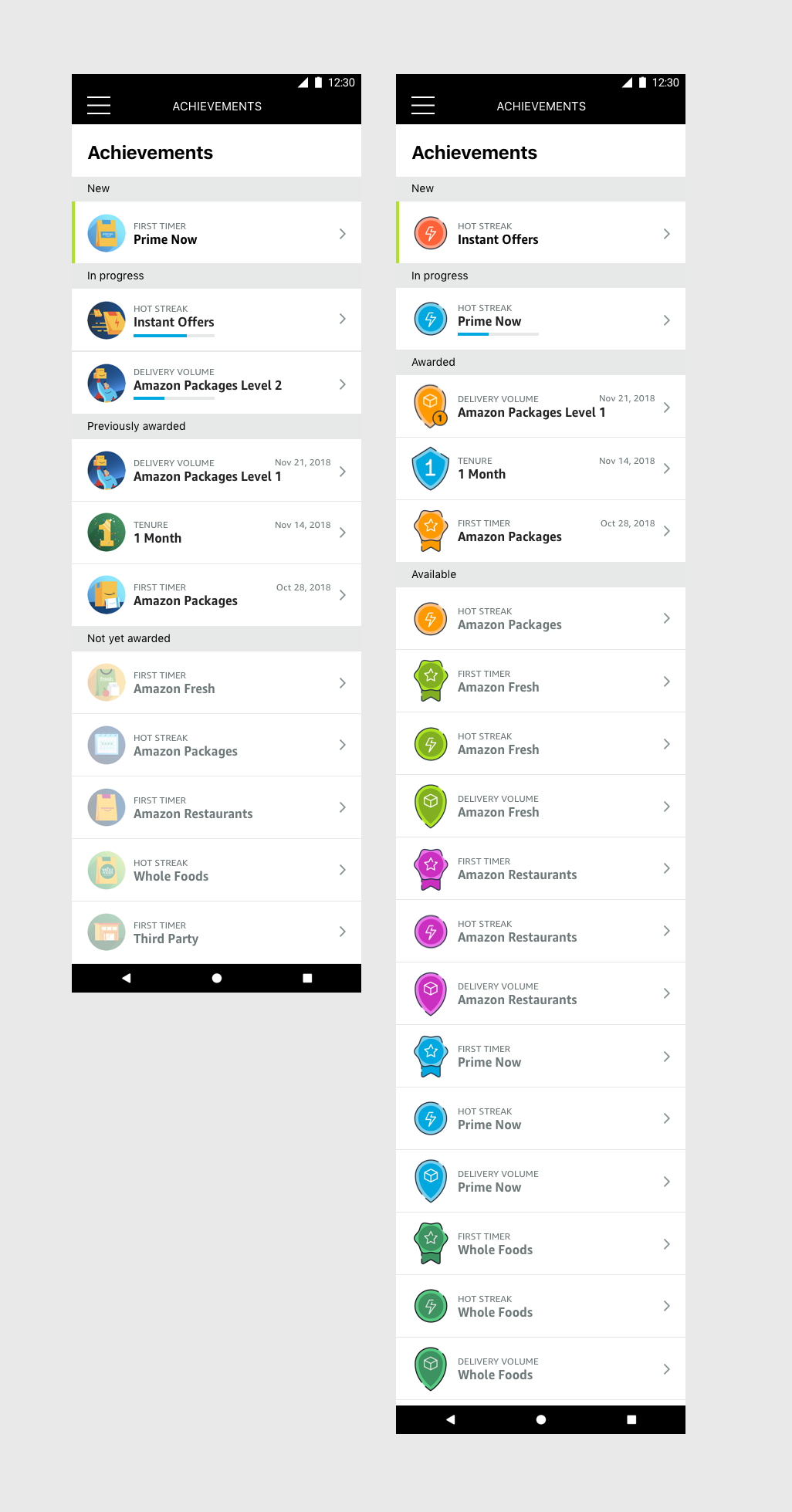
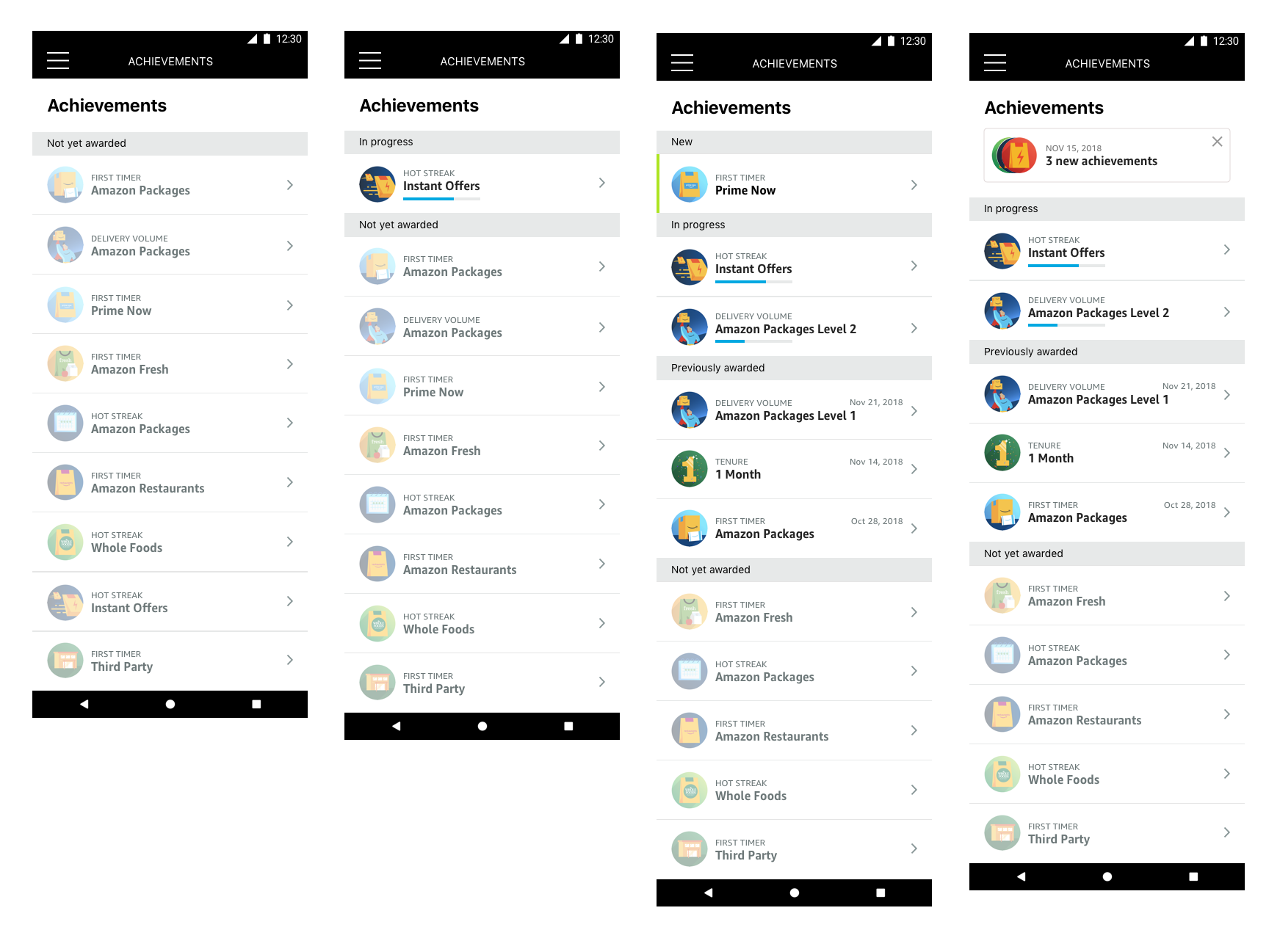
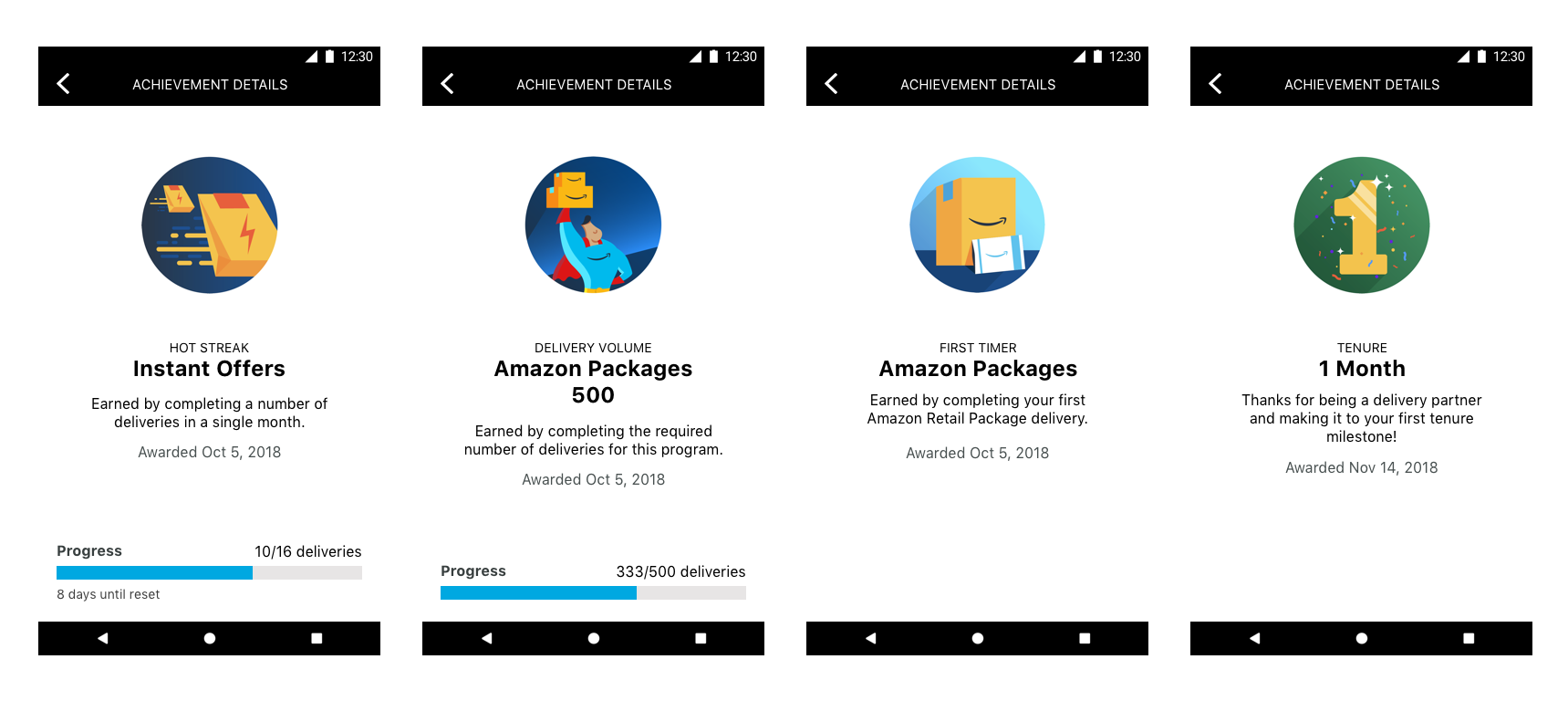
The achievements page is intended to show users what achievements were available so that they could find things they thought were interesting and make progress toward achieving those goals.
We started with four different types of achievements:
- Surprises that only show up when you get them (tenure)
- Achievements that require a single action
- Achievements that require consistent effort and a specified quantity to complete
Design Evolution
Below, you can see where the UX and illustrations were before I got involved. The initial designs needed refinement to better scale for the future and provide a more polished experience.
Alternative Approach
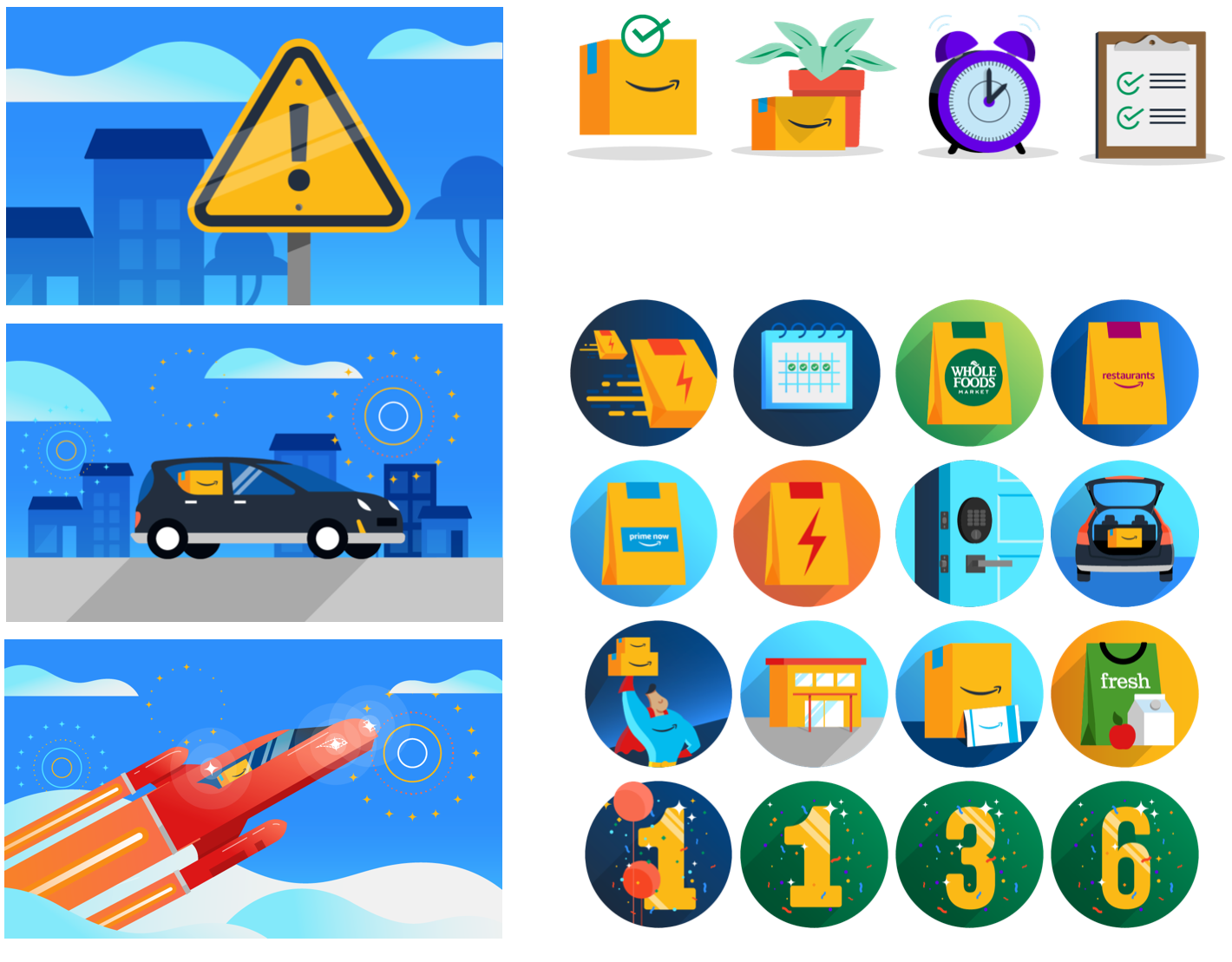
Due to concerns about the visual design scaling for large numbers of achievements, display in small spaces, and the linear nature of the standing images (cars) that would break if we changed the number of sections, we pursued a design-led effort to leverage an existing logistics design framework. The visual designer and I collaborated to show both the updated work from the vendor and the systems thinking from the internal library. Unfortunately, leadership chose to go with the vendor as it was more "fun and playful" which was a key leadership objective.